
Condensation & Black Mould
The most common damp problem in Merseyside homes, and the most misunderstood. Everyday moisture from cooking, washing and drying clothes condenses on cold surfaces, and black mould follows. Painting over it does not work; changing the conditions does.
Whole-home ventilation from about 1p a day
Common Signs of Condensation and Black Mould
-

Condensation on Windows
If your windows regularly stream with condensation or water collects on the window sills, this is a sign that excess moisture and humidity are building up inside your home.
Persistent window condensation should not be ignored. Left unresolved, it can lead to black mould growth, damaged window reveals, peeling paint, deteriorating plaster and damage to surrounding surfaces.
-

Black Mould in Corners
Small black spots or speckled mould may appear in ceiling corners, around window reveals, behind furniture or on cold external walls.
Black mould in these areas is commonly caused by condensation, high indoor humidity, cold surfaces and poor air circulation. Without effective mould treatment and improved ventilation, the mould is likely to continue spreading or return after cleaning.
-

Mould Behind Furniture
Furniture placed tightly against cold external walls can restrict airflow and trap cool, moisture-laden air.
This creates the ideal conditions for condensation and mould growth behind wardrobes, beds, sofas and other large items of furniture. Moving furniture slightly away from external walls can improve airflow, but the underlying condensation or ventilation problem may still require professional investigation.
-

Damp and Musty Smells
A persistent damp or musty smell that remains no matter how often you clean or air out your home can indicate hidden mould, condensation or excessive indoor moisture.
Musty odours are particularly common inside wardrobes, cupboards, bedrooms, bathrooms and poorly ventilated rooms.
-

Mould on Clothes and Fabrics
Black, green or white mould spots may appear on clothes, shoes, bags, curtains and other stored fabrics.
This is particularly common inside wardrobes and cupboards positioned against cold external walls. Mould-contaminated clothing can be a sign that humidity levels are too high and that the room does not have sufficient ventilation or air movement.
How Condensation Forms
Everyday activities such as cooking, showering, washing clothes and drying laundry indoors can release up to 10 litres of moisture into the air each day in a typical family home.
If this moisture cannot escape through adequate ventilation, humidity builds up indoors. When the warm, moisture-laden air meets a cold surface, such as an external wall, window or ceiling, it cools and forms condensation.
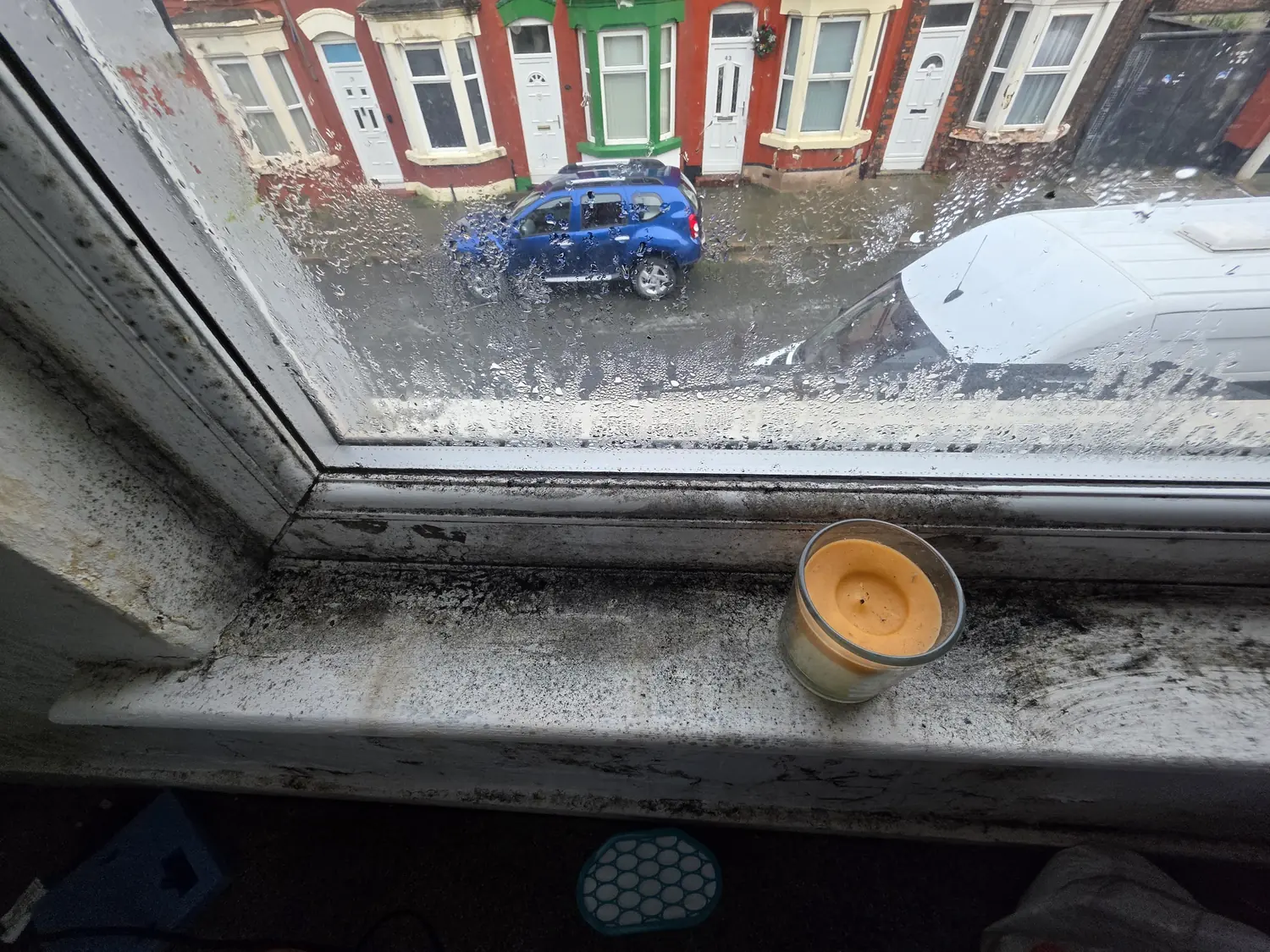
Condensation commonly forms on the coldest parts of a property, including:
- Windows and window reveals
- External walls
- Ceiling corners
- Bathrooms and kitchens
- Areas behind wardrobes and furniture
- Rooms with limited heating or ventilation
Over time, these damp surfaces create ideal conditions for black mould to develop.
Many homes suffer from inadequate ventilation, allowing indoor humidity and condensation to become recurring problems. Bleach, household mould sprays and mould-resistant paint may temporarily remove or cover the visible staining, but they do not resolve the underlying cause.
Unless the excess moisture, cold surfaces and ventilation issues are properly addressed, the black mould is likely to return.
Professional Black Mould Removal and Condensation Treatment
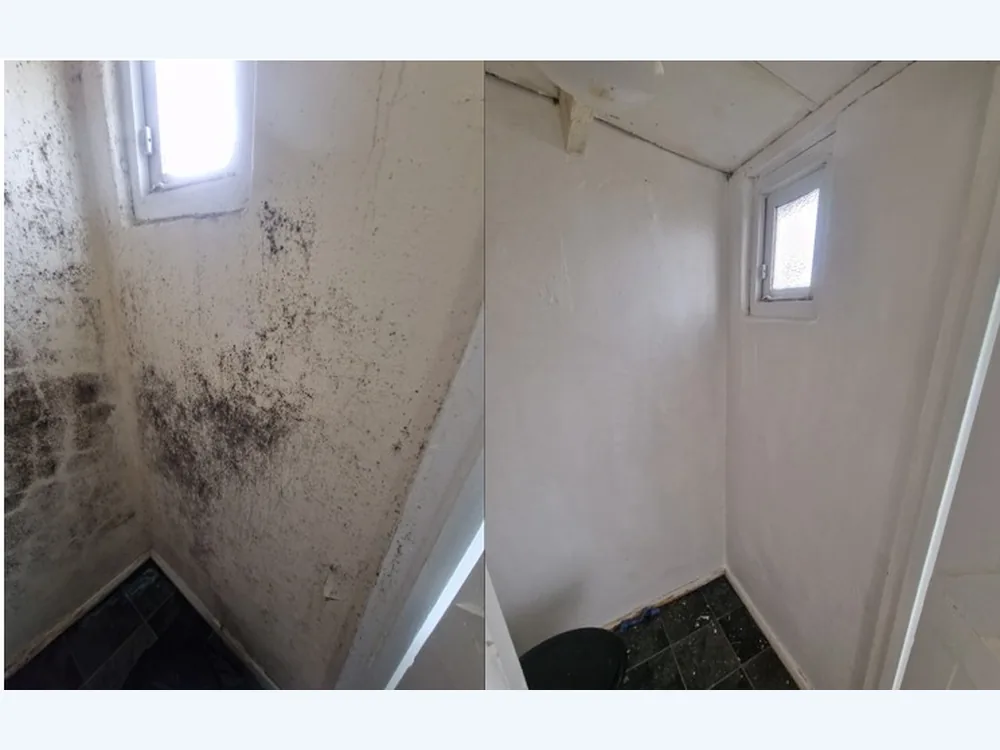
Professional Mould Removal and Sterilisation
Our professional black mould removal and sterilisation treatment targets active mould growth rather than simply bleaching or painting over the affected surface.
We thoroughly treat contaminated areas using specialist mould treatment products to remove active spores and help reduce the risk of mould returning.
Read more about Mould Removal & Sterilisation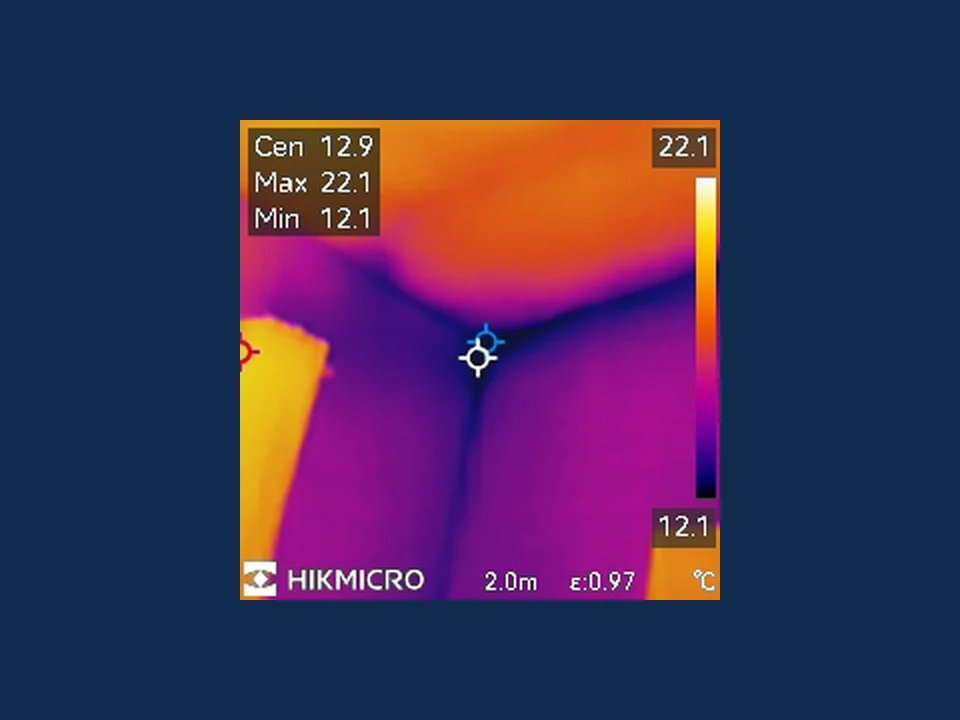
Increase the Surface Temperature of Cold Walls
Cold external walls are particularly vulnerable to condensation and black mould.
Thermocoat warm wall coatings help increase the internal surface temperature of cold walls. This reduces the likelihood of moisture condensing on the surface and helps create conditions that are less favourable for black mould growth.
Warm wall coatings can be particularly beneficial in bedrooms, living rooms, window reveals and properties with solid external walls.
Read more about Mould Removal & Sterilisation
Improve Whole-House Ventilation
Improving ventilation is one of the most important steps in controlling condensation, excessive humidity and recurring black mould.
Read more about PIV VentilationWe install a range of condensation and ventilation solutions, including:
- Positive Input Ventilation systems
- PIV units for houses and flats
- Bathroom extractor fans
- Kitchen extractor fans
- Continuous-running ventilation fans
- Air bricks
- Wall vents
- Subfloor ventilation
A properly designed ventilation system helps remove excess moisture, improve indoor air quality and reduce the conditions that allow condensation and mould to develop.
Condensation and Mould Specialists
NW Damp & Mould Specialists Ltd provides professional condensation surveys, black mould removal, mould sterilisation and ventilation installation throughout Southport, Liverpool, Sefton, West Lancashire, Merseyside and surrounding areas.
Our experienced damp and mould specialists identify the underlying cause of the problem and recommend a practical solution designed for your property.
What homeowners tell us.
Arrange a damp or mould assessment.
Tell us what you are seeing and we will trace the cause and quote the fix once. Or WhatsApp a photo for a fast opinion.
Request a Damp Assessment
Tell us where the problem is located and what signs you have noticed. A member of our team will contact you to discuss the issue and arrange a suitable inspection.
"*" indicates required fields