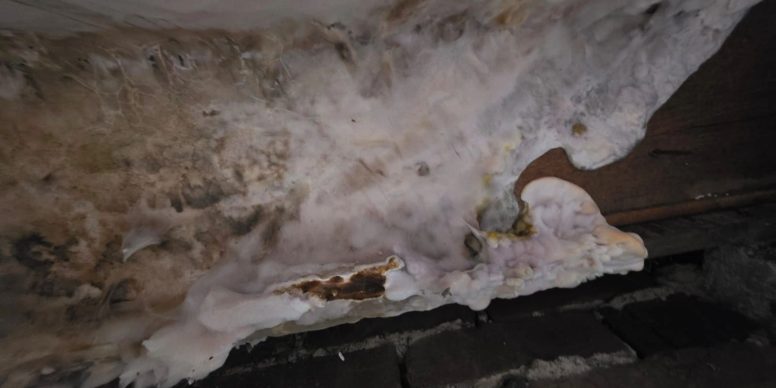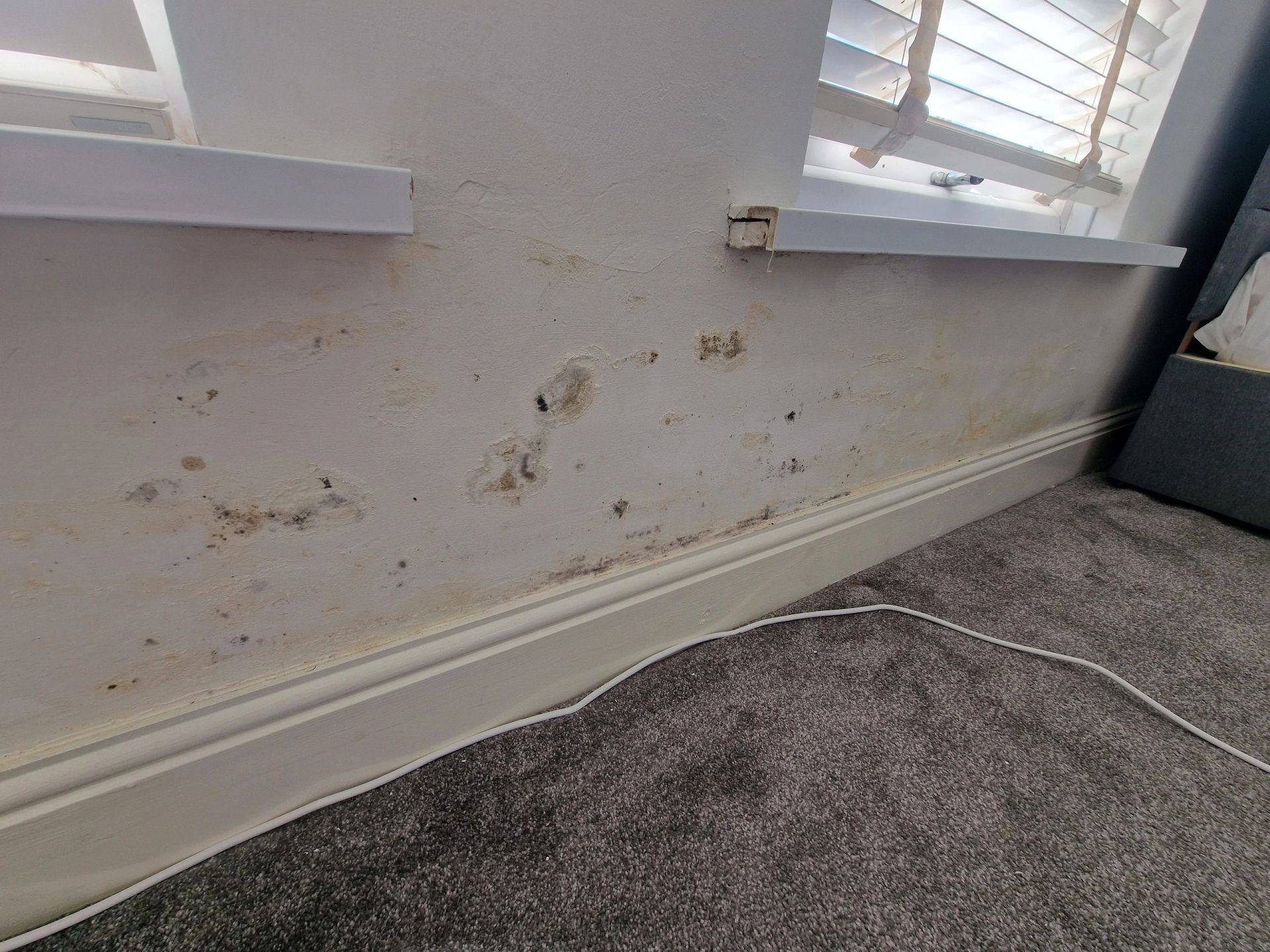
There are three main areas which can cause dampness in buildings.
1 – CONDENSATION.
2 – RISING DAMP.
3 – INGRESS OF MOISTURE.
1. Condensation – typically 60% of all issues investigated
There is always moisture within the air even if you cannot see it. The colder the air, the less moisture it can hold. Small droplets of moisture can then appear on surfaces. This is known as Condensation. It appears on cold surfaces and in places where there is little movement of air (eg. In corners, on / near windows, behind wardrobes). Mould growth is associated with condensation and can be found on damp surfaces such as plaster, wallpaper and timber.
There are steps you can take to reduce Condensation;
PRODUCE LESS MOISTURE
· Cover Pans while cooking.
· Dry washing outdoors or use a tumble dryer.
· Do not dry clothes indoors free-standing.
VENTILATE TO REMOVE MOISTURE –
· Keep trickle vents in double glazing, open all the time.
· Ventilate kitchens and bathrooms by using a humidity-controlled fan.
· Close kitchen and bathroom doors when rooms are in use, such as when you take a shower or bath, or when you are cooking in the kitchen.
· Install passive vents within the property. These are commonly called air bricks and will help with the flow of air around your home.
INSULATE YOUR HOME – Insulating lofts/cavities will help to keep the building warm.
· In cold weather, you should keep your heating on low, all day and night, this will raise the room temperature.
2. Rising Damp – typically 20% of all issues investigated
Rising Damp usually occurs in walls where the foundations extend down below the ground water table, or a perched water table. The moisture rises either through the bricks or the mortar joints due to fine capillaries or pores in the materials (a process known as Capillarity action). There are three main factors that affect the quantity of moisture absorbed by the wall and the height to which it rises;
· The capacity of the wall material to absorb moisture. –
· The amount of moisture within the ground. –
· How quickly the moisture can evaporate.
Moisture will continue to rise up the wall until it meets with a physical barrier. The construction of most modern buildings includes a damp-proof course (DPC) which is a layer of impermeable material (eg: slate, bitumen, plastic) built into the solid walls just above ground level. The DPC prevents moisture from rising within the wall construction. In the absence of a damp-proof course, the moisture will continue to rise up the wall to a height of around 1.5m. Many situations where rising damp occurs are often due to the bridging of the existing damp-proof course rather than the absence of one. This would be classed as induced rising damp.
Older buildings, particularly those with solid stone or brick external wall, do not always have a DPC. It is assumed that rising dampness is likely to be a problem in these types of properties; however, a full investigation, where practical, of the cause of dampness, must be carried out to determine if rising damp is indeed the cause.
3. Ingress of moisture – typically 20% of all issues investigated
Moisture ingress will occur where the building is unable to prevent moisture entry where moisture is present. Moisture can be driven in by wind and rain attracted by salts and drawn towards the warmth. Penetrating dampness can occur through many building defects, examples include;
· Rainwater goods – Blocked valley gutters and downpipes can cause rainwater to ‘pond’ and overspill the flashings. Parapets and chimneys can also become very damp, with moisture draining downwards to other parts of the building causing dampness within the property.
· Leaking roofs – Common defects of roofs include corrosion of nails that fix the tiles to the battens, cracked or missing roof tiles, mortar missing from ridge tiles. These defects can all allow the passage of moisture into the building Plaster
· Rendering – Defective plaster rendering can occur mostly on external walls caused by penetrating rain, evaporation and condensation. These thermal stresses can cause shrinkage and cracking of the render.